
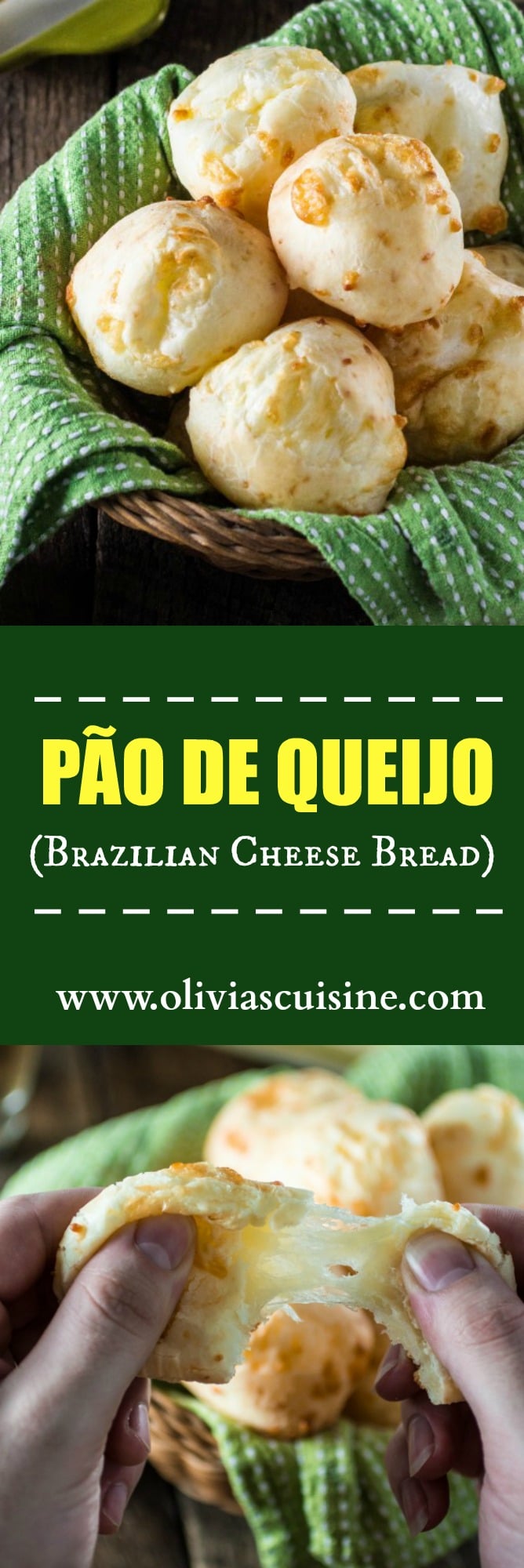
Pão de Queijo (Authentic Brazilian Cheese Bread)
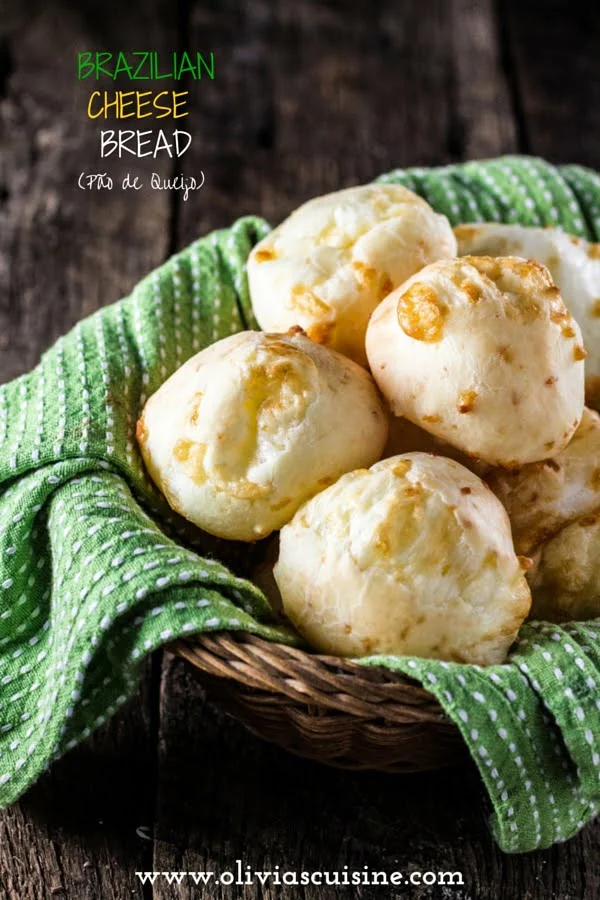
If you’ve never had Pão de Queijo before, prepare to fall in love. 💛 These Brazilian cheese breads are crispy on the outside, perfectly chewy on the inside, and packed with cheesy goodness in every bite. They’re a staple in Brazil (we grow up eating them!), and once you try them fresh out of the oven, you’ll understand why. The best part? You don’t need anything fancy to make them at home.
As a Brazilian, sharing these recipes is incredibly special to me. If you’re new to Brazilian cuisine, I have tons of recipes for you to explore – from comforting classics like feijoada to sweet treats like brigadeiros and everyday favorites like arroz soltinho. It’s all the kind of food I grew up eating, made simple enough for you to recreate at home.
At a Glance
- Flavor: Cheesy, savory, with a subtle tang from the Parmesan
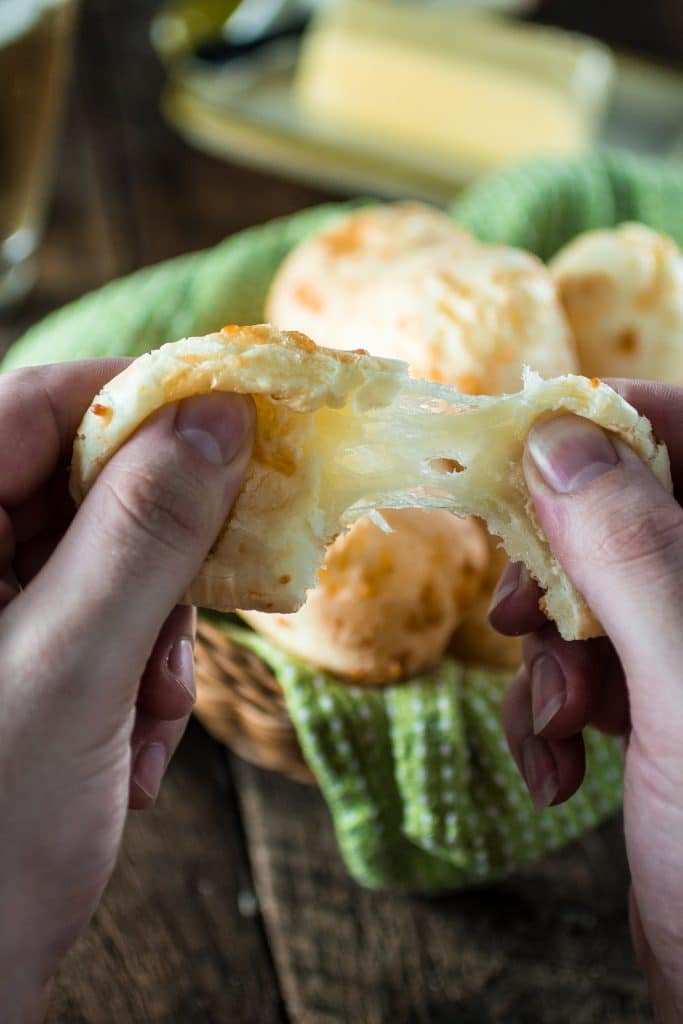
- Texture: Crisp and golden outside, soft, stretchy, and perfectly chewy inside
- Difficulty: Easy (just follow the steps – no kneading required!)
- Time: About 30 minutes, start to finish
- Diet: Naturally gluten-free (made with tapioca flour)
- Yield: About 20–30 cheese breads (depending on size)
- Method: Stovetop + stand mixer (to hydrate the tapioca flour properly)
- Perfect for: Breakfast, afternoon coffee, or anytime snacking ☕
What is Pão de Queijo?
If Brazil had a signature snack, pão de queijo would be it. These little cheese breads are made with tapioca flour, which gives them that unique chewy texture you won’t find in regular bread. They puff up in the oven, forming a golden, slightly crisp exterior with a soft, stretchy center packed with cheesy flavor.
Pão de queijo originated in the state of Minas Gerais, where cooks began using cassava (the root used to make tapioca flour) centuries ago, during colonial times. Wheat flour wasn’t widely available, so they got creative – and pão de queijo was born. The addition of cheese came later, once dairy production became more common in the region, turning it into the version we know and love today.
In Brazil, pão de queijo is everywhere. You’ll find it at bakeries, cafés, grocery stores, and just about every home kitchen. It’s a staple for breakfast or café da tarde (afternoon coffee), always served warm – and usually eaten faster than you can make the next batch.
Ingredients
To make authentic Pão de Queijo, you will need:
- Tapioca flour – Also known as tapioca starch, this is what gives pão de queijo its signature chewy texture. It’s naturally gluten-free and not interchangeable with other flours – this is the star of the recipe!
- Milk – Helps hydrate the tapioca flour and creates that soft, stretchy dough.
- Oil – Adds richness and keeps the cheese breads tender. I usually use a neutral oil like vegetable or canola.
- Salt – Enhances all the flavors – especially important since the dough itself is very simple.
- Eggs – Give structure and help bind everything together. Don’t skip or substitute here!
- Parmesan cheese – Adds that classic savory, slightly tangy flavor. Use freshly grated if you can for the best taste.
- Mozzarella cheese – Brings the gooey, melty factor and helps create that irresistible stretchy center.
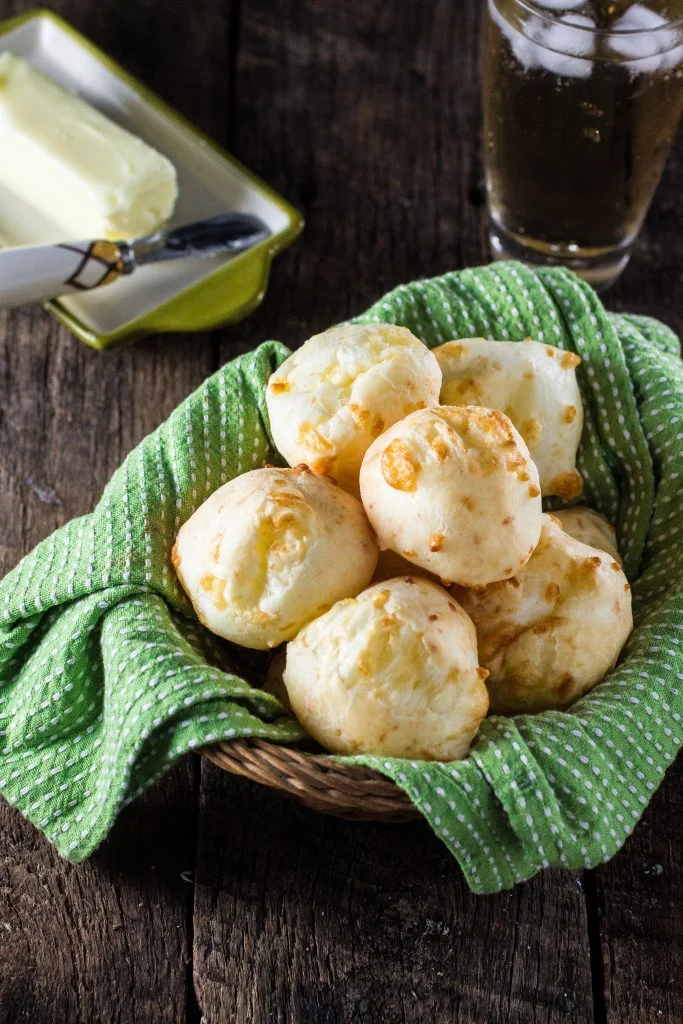
How to Make Pao de Queijo
Pão de queijo is one of those recipes that feels fancy, but is actually very simple once you understand the method. In Brazil, it’s traditionally made with polvilho doce (sweet tapioca starch) and polvilho azedo (sour tapioca starch), plus queijo meia cura for that classic flavor. Since those ingredients aren’t always easy to find here in the U.S., I’ve adapted this version using tapioca flour and a mix of Parmesan and mozzarella – so you still get that chewy, cheesy goodness without having to hunt down specialty ingredients.
The dough might surprise you at first – it’s soft, sticky, and nothing like traditional bread dough. That’s completely normal! The magic happens when the hot milk mixture is poured over the flour, transforming it into that signature pão de queijo texture. Trust the process, and you’ll be rewarded with perfectly golden, chewy cheese breads.
Recommended tools and equipment: stand mixer (or you can do it by hand), saucepan, baking sheet, parchment paper
Here’s how I make this Brazilian cheese bread recipe. As always, you will find the printable (and more complete) version of the recipe at the end of this post!
Step 1: Heat the liquid ingredients
- In a saucepan, combine the milk, water, oil, and salt. Bring to a boil over medium-high heat.
Tip: Make sure it actually comes to a full boil – this is key for properly hydrating the tapioca flour and getting that signature chewy texture.
Step 2: Pour over the tapioca flour
- Place the tapioca flour in the bowl of a stand mixer. Pour the hot liquid over the flour.
- Mix until combined. The mixture will look white, sticky, and a bit like fondant – this is exactly what you want!
Tip: Don’t panic if it looks unusual at this stage. Pão de queijo dough is very different from traditional bread dough.
Step 3: Add the eggs
- With the mixer running, add the eggs one at a time, mixing well after each addition. At first, it might look like the eggs won’t incorporate – but keep mixing and the dough will come together.
Step 4: Mix in the cheese
- Add the Parmesan and mozzarella a little at a time, mixing until fully incorporated. The dough should be soft and sticky. If it feels too loose, you can add a bit more tapioca flour – but go slowly, as too much can make the cheese breads dense instead of chewy.
Step 5: Shape the dough
- Preheat your oven to 400°F/200°C and line a baking sheet with parchment paper.
- Lightly wet your hands with cold water. Using a spoon or small scoop, portion the dough and roll it into balls slightly smaller than golf balls.
- Place them on the prepared baking sheet, leaving a little space between each one.
Step 6: Bake
- Bake for 15–20 minutes, or until the pão de queijo are puffed and golden.
Step 7: Serve warm
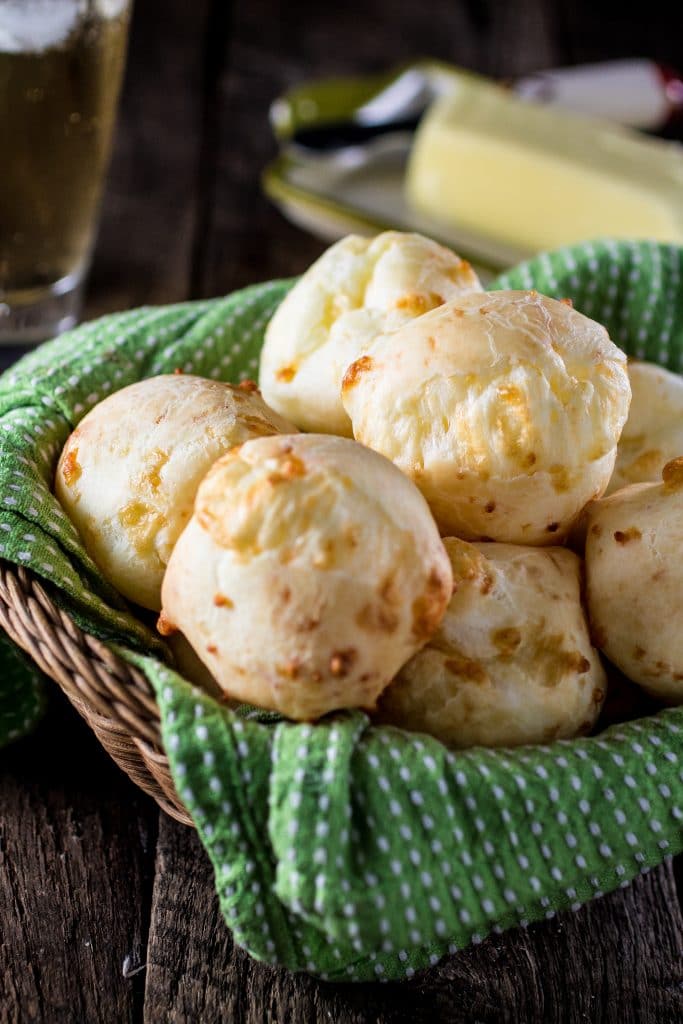
Remove from the oven and serve immediately while warm – this is when they’re at their best, with a crisp exterior and that irresistible chewy, cheesy center.
Olivia’s Tips
- Make sure the milk mixture is boiling hot: If the liquid isn’t hot enough, the tapioca flour won’t hydrate properly and the texture will be off.
- Don’t be alarmed by the dough: Pão de queijo dough is supposed to be soft, sticky, and a little unusual. It won’t look like traditional bread dough, and that’s exactly right.
- Wet your hands when shaping: This makes a huge difference. A little cold water keeps the dough from sticking and helps you roll smooth, even balls without frustration.
- If the dough is too sticky to shape, chill it briefly: If your dough feels too soft or hard to handle, you can refrigerate it for 10–15 minutes to firm up slightly. This makes shaping much easier. Just don’t leave it in the fridge too long, or it can become too stiff and harder to work with.
- Use freshly grated cheese if you can: Pre-shredded cheese contains anti-caking agents that can affect how smoothly it melts. Freshly grated will give you better flavor and that irresistible stretchy center.
- Don’t overdo the flour: If your dough feels a bit loose, you can add a little more tapioca flour – but go slowly. Too much will make the pão de queijo dense instead of soft and chewy
- Eat them warm (this is key!): Pão de queijo is at its absolute best fresh out of the oven, when the outside is crisp and the inside is soft and stretchy. If they sit too long, they’ll lose that magic – but don’t worry, they reheat beautifully!
Serving Suggestions
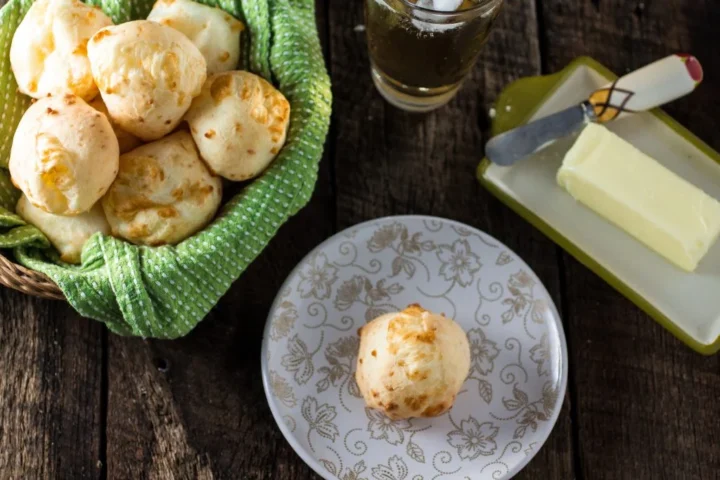
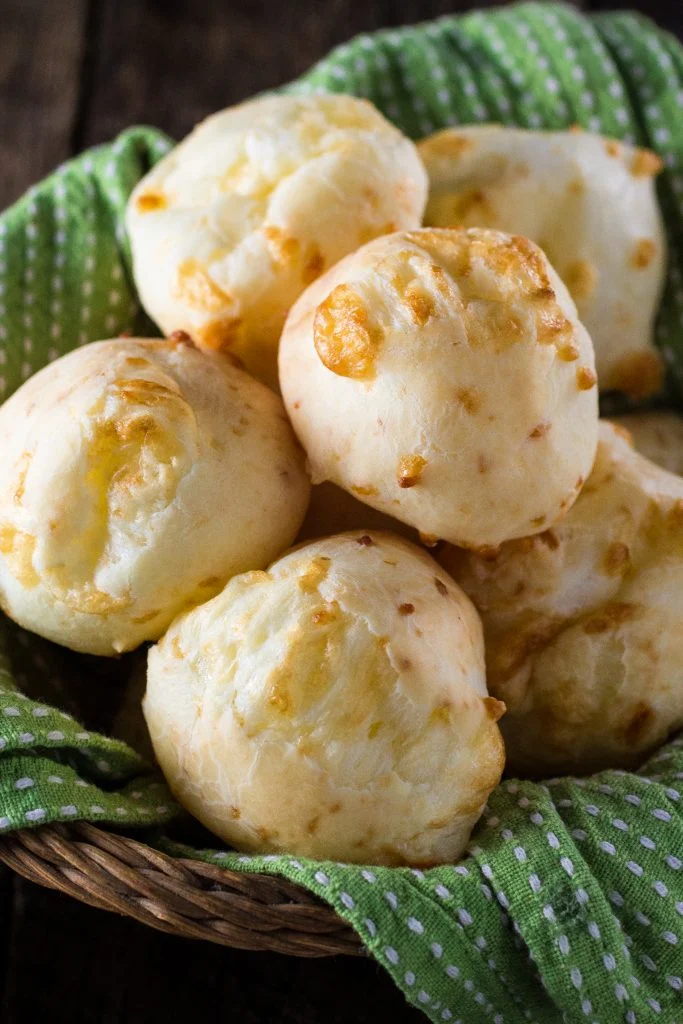
Pão de queijo is best served warm, straight from the oven, when the outside is crisp and the inside is soft and chewy. In Brazil, it’s most commonly enjoyed with a cup of coffee for breakfast or café da tarde – simple, cozy, and perfect.
For a truly Brazilian experience, try serving it with an ice-cold guaraná. The slightly sweet, fizzy soda pairs surprisingly well with the savory, cheesy bread and is a nostalgic favorite for many of us.
You can also turn pão de queijo into mini sandwiches. Slice them open and fill with cheese, ham, or your favorite spreads. One of my favorite ways to enjoy them is as Romeo and Juliet bites – little pão de queijo sandwiches filled with cheese and guava paste. It’s that perfect sweet-and-savory combination that Brazil is known for!
And if you’re feeling a little adventurous, try serving pão de queijo with dulce de leche. It might sound unusual, but that salty, cheesy bread with sweet, creamy dulce de leche? Absolutely irresistible.
Variations
One of the best things about pão de queijo is how versatile it is. While the classic version is simple and perfect as-is, there are plenty of ways to tweak it depending on what you have on hand or how you want to serve it. Here are a few ideas to get you started:
- Try different cheeses – While this recipe uses Parmesan and mozzarella for the best balance of flavor and stretch, you can experiment with other cheeses. Sharp cheddar adds a stronger flavor, while a bit of Gruyère or fontina can bring extra richness. Just keep a good balance between a flavorful cheese and a melty one.
- Make it with traditional Brazilian ingredients – If you can find them, try making pão de queijo with a mix of polvilho doce and polvilho azedo, plus queijo meia cura. This will give you a more traditional flavor and that slightly tangy note that’s classic in Brazil.
- Blender version (easier method) – If you’re looking for a quicker, more hands-off approach, I also have a blender pão de queijo recipe that uses muffin tins. You simply blend all the ingredients into a smooth batter and bake – no mixing or shaping required. The texture is slightly different (a bit more airy and less chewy), but it’s a great option when you want something easy and still delicious.
- Mini or larger pão de queijo – You can make them smaller for bite-sized snacks or slightly larger for sandwiches (or even as burger buns). Just adjust the baking time as needed – smaller ones will bake faster, while larger ones may need a few extra minutes.
- Add-ins for extra flavor – Mix in finely chopped herbs, garlic powder, or even a little cooked bacon for a fun twist.
Storage & Reheating
- Storage (short term) – Store any leftovers in an airtight container at room temperature for up to 2 days. They’re best fresh, but still delicious reheated.
- Refrigeration (if needed) – You can refrigerate them for up to 5 days, though they may lose some of their soft, chewy texture. Reheating will help bring them back!
- How to reheat – For best results, reheat in a 350°F (175°C) oven for 5–10 minutes, or until warmed through. This helps restore that crisp exterior and soft center. You can also microwave them for about 20–30 seconds, but they’ll be softer and less crisp.
Freezing (highly recommended!)
- Freeze before baking (best option)
Shape the dough into balls and place them on a baking sheet. Freeze until solid, then transfer to a freezer-safe bag or container.
When ready to bake, place them straight from the freezer into a 400°F (200°C) oven—no need to thaw! Just add a few extra minutes to the baking time. - Freeze after baking
Let the pão de queijo cool completely, then freeze in an airtight container for up to 2 months. - Reheating from frozen
Bake in a 350°F (175°C) oven until heated through and crisp again.
Frequently Asked Questions
Yes! The best way is to shape the dough into balls and freeze them unbaked. When ready to bake, place them straight from the freezer into the oven – no need to thaw. Fresh pão de queijo anytime!
That’s completely normal. Pão de queijo dough is naturally soft and sticky because of the tapioca flour. Wetting your hands with a little water makes it much easier to shape.
Yes! You can mix everything by hand using a sturdy wooden spoon. It takes a bit more effort, especially at the beginning, but it works just fine.
This usually happens if the liquid wasn’t hot enough when poured over the tapioca flour, or if too much flour was added to the dough. Make sure the milk mixture comes to a full boil and avoid over-measuring the flour.
Yes! That’s actually the traditional way to make pão de queijo. Using a mix of both gives a slightly tangier flavor and an even chewier texture.
Did you make this recipe? I love hearing from you! Please comment and leave a 5-star rating below. You can also take a photo and tag me on Instagram with #oliviascuisine.
Pão de Queijo (Authentic Brazilian Cheese Bread)
Ingredients
- 1 1/4 cups (300ml) whole milk
- 1/2 cup (120ml) water
- 1/3 cup (80 ml) neutral oil (such as vegetable or canola)
- 2 teaspoons (10g) salt
- 4 cups (500g) tapioca flour (tapioca starch)
- 2 large eggs
- 1 1/2 cups (150g) Parmesan cheese, finely grated
- 1 cup (100g) mozzarella cheese, shredded
Instructions
- Preheat oven to 400°F (200°C) with a rack in the middle. Line a baking sheet with parchment paper.
- In a saucepan, combine the milk, water, oil, and salt. Bring to a boil over medium-high heat.
- Place the tapioca flour in the bowl of a stand mixer. Once the liquid mixture reaches a full boil, pour it over the flour. Mix until combined – the texture will be sticky and slightly stretchy.
- With the mixer running, add the eggs one at a time, mixing well after each addition. The dough may look like it won’t come together at first – keep mixing until smooth.
- Add the Parmesan and mozzarella a little at a time, mixing until fully incorporated. The dough should be soft and sticky.
- The dough is supposed to be soft and sticky. However, if you're worried it's too liquidy, add some more tapioca flour. Just don't over do it or your cheese bread will be tough and not too gooey.
- Lightly wet your hands. Using a spoon or small scoop, portion the dough and roll into balls slightly smaller than golf balls. Place on the prepared baking sheet.
- Place the balls on a baking sheet covered with parchment paper and bring it to the preheat oven.
- Bake for 15–20 minutes, or until puffed and golden.
- Serve warm for the best texture – crispy outside, soft and chewy inside.
Notes
- If the dough feels too sticky to shape, refrigerate for 10–15 minutes to firm up slightly.
- Avoid adding too much extra tapioca flour, or the cheese breads may turn dense.
- For best results, use freshly grated cheese.
- Freezing instructions: For best results, freeze the dough before baking. Shape into balls, place on a baking sheet, and freeze until solid. Transfer to a freezer-safe bag and freeze for up to 2 months. Bake straight from frozen at 400°F (200°C), adding a few extra minutes to the baking time.
Nutrition



298 Comments on “Pão de Queijo (Authentic Brazilian Cheese Bread)”
Oi Olívia, se eu substituir a mussarela pelo queijo Gruyère dá certo?
Da sim, Aline! :)
What did I do wrong?!
I followed the recipe (but halved it). It seems way to liquify so I added more tapioca till it got to a doughy consistency. I rolled it into balls but then they melted in the oven into a chewy flat bread?!
THANK YOU so much for your recipe! We absolutely loved these Brazilian cheese breads — so tasty, soft, gooey, warm, and delicious! I followed your recipe to a tee, except I didn’t roll the dough with wet hands; instead, I used my “wet” mini ice-cream scoop by dipping it in water and scooping out the balls, and they turned out perfectly! Will definitely make these again :D. YUMMY!
Made them. Mmmmmm. Tagged you on fb
Delicious! It tastes just like my grandma’s pão de queijo.
I added oil in my hands to roll the balls – grandma’s tips – it makes it more golden and crunchy outside and soft inside.
Thank you, Olivia. Made my day!
I just made these today and used cheddar instead of parmesan because I didnt have any on hand. Otherwise I followed your recipe ecactly and they turned out great! I had difficulty rolling them with my hands so I just used 2 spoons to form a rough ball and they puffed out perfectly in the oven!
My daughter and I just made these, they are really good and we’ll definitely be making them again. The only thing is, it turned out too salty even though I only added 1.5 teaspoon salt. Next time I will add a lot last salt and probably less cheese as well.
This was SO good and got rave reviews from my party – 5 stars times 9! Extra points for gluten free – my friend with Celiac’s took the rest of them home :) So, I don’t have a mixer… I dove in with both hands and my kids took turns putting in the eggs and cheese. Once I got it mixed, and scraped the dough off my hands, I used the cold water idea to make the balls, which made the rest of the process very easy. Unfortunately, I discovered I only had one tiny piece of parchment paper left so I just spray my pans. The rolls on those pans did not compare to the glory of the parchment paper rolls, but we were still happy. Thank you!
I just made this recipe. The dough was WAY too wet, even after adding more tapioca flour, to roll into balls. I ended up spooning the batter into muffin pans, filling each 1/2 way. I baked them in a 400-degree oven for 18 minutes, rotating the pan halfway through the baking. They came out pretty good, but would probably have been better had I not added so much extra flour. The centers were nice a gooey and they taste good.
Actually- tapioca flour (or starch) is the same thing as manioc starch. Tapioca comes from the manioc plant. So – it’s very authentic!
Do you use a the bread dough mixer attachment or the whisk attachment on your stand mixer? Going to try this today!
I use the paddle attachment!
Thank you so much for this recipe, Olivia! I missed pao de queijo so much. I just made them and they were fabulous! It even converted my non-brazilian boyfriend into loving it!
I made these today and they turned out great. They were absolutely delicious! The texture and taste was very similar to the ones I have had at the Brazilian restaurant Fogo De Chao.
The dough was wet and sticky as described in the article and in the comments. I just scooped the dough into mini muffin tins using a cookie scoop. I sprayed the scoop with a cooking spray before using it.
Came out perfect, making no changes to the above recipe. Cruntchy on the outside but not hard and nice and cheese gooey on the inside.
They didnt ball at all on the cookie sheet and i was thinking “oh great a failure” but once in the oven they completely balooned to perfection.
We had these every morning in brazil and they really bring back memories.
Bonus points to the author for including freezing instructions so we can have them fresh at any time.
Thank you!
I’m not a cook AT ALL but my son turned 11 and his beloved Brazilian Steakhouse has shut down.. so I decided to try to make his favorite item from the restaurant.. the cheese rolls. Since I’m not good in the kitchen, I made sure to follow EXACTLY as instructed. Even borrowed a stand up mixer. Well, looks like I’m going to have to buy one now. They were PERFECT! I think maybe better than the ones at our local steakhouse!!! Thanks so much for sharing this recipe.
I’m so glad you guys liked it! Thank you for the feedback!
Can I double the recipe? Would you modify?
I double the recipe all the time and keep an uncooked bag in the freezer at all times.
Greetings from Singapore and thank you so much for this recipe!
Had to come up with something for a Brazilian night cook out last Friday and made these heavenly breads on the spot. It was a hit! It was soft, pillowy and chewy, all at the same time. How good was this? And this is the first time I ever got my hands to doing anything this fancy.
Did it without a mixer and boy, it was a workout! I was literally sweating buckets from the stickiness of the batter. Well worth it considering I’m burning calories before enjoying this treat (and yes, diet had to be discarded for this).
The only thing was mine came out smoother without the lovely crust that you had. Perhaps I needed another 5-10 mins in the oven (I baked mine in 20mins)
Cheers!
Thank you for posting this recipe. I make it all the time for my son, who has celiac. I double the recipe and always keep some on hand in the freezer. They make the perfect after school snack. The only thing I’ve changed in the recipe is that I substitute queso fresco for the mozzarella. YUM!!!
Made this recipe today and it worked out great. One note about soupy batter – folks may consider allowing the batter to sit for a few minutes. As it sits, the tapioca flour absorbs the liquid and it will get thicker and sticky. I also just use a mini-muffin tin – they come out even and wonderful and it’s just so much easier than forming the little balls. One other note – though it’s just good technique – NEVER open the oven unless you’re planning on taking out the baked rolls. Opening the oven repeatedly lowers the temperature and will cause the rolls to deflate.
I second that advice about letting the dough/batter sit for a while, it made a big difference. Mine still came out more pancake shaped than anything else, so next time I will do 4 cups PACKED flour instead of just scooped in.
Very excited to try these, can anyone tell me roughly how many balls this recipe will make? Or how many people it will serve as a snack?
Depends on the size. About 30 golf sized balls, I’d say.
First off: Thank you so much! When Joao Gilberto passed away, i decided I had to have a party in his honor and so I looked up Brazilian recipes. On Tuesday I had party #1 and I made your coxinhas and your feijoada. Both were amazing. The coxinhas are one of the best things I’ve ever made. On Saturday, I am doing party #2 and I plan to make these pao de queija.
i have a question: Can I prepare the dough earlier in the day and form into balls without freezing? If I do so, how far ahead can I do this? I want to pop them in the oven and serve them warm after my guests arrive. If I can’t prepare them say 3 hours earlier on the same day, I’ll make them the day before and freeze them. Please let me know!
Update! I made these late in the day and did not have to leave them waiting long, but I suspect they could be prepared as far ahead as 4-5 hours before cooking. The recipe worked perfectly as written. Absolutely delicious!
Yum! Although as a Brazilian I think the tapioca leaves it with a little bit of an after taste, since I moved to a non Brazilian area this did the job!
I also tried with a wheel of smoked Gouda and it came out good!
One batch I made I totally forgot the eggs, and long behold, I didn’t even notice it when I was rolling or when I baked it!
Fun tip: putting it in a 12 muffin tin holder makes it sooooo yummy with a thick crunchy bottom.
Did you use grated Parmesan or the stuff in the shaker that you put on spaghetti?
I use freshly grated!
Can I use cornflour instead of tapioca flour?
Hi Lucy,
I’ve never tried it but I don’t think it’d be the same!
Also I just wondered if you could say how much flour you used in grams because I had a bit of a hard time measuring it, and I think I might not have packed the cup enough because the batter came out a bit liquidy (still turned out amazing when baked though!)
Hello, mine came out decent, with one flaw – the puffs puffed up, but in a way that there was one big bubble that formed between the bottom and the top, and most of the dough was in one relatively thick gooey layer above this bubble. What could cause that? Ideally there’d be bubbles throughout the dough, obviously.. (btw i did boil the milk :) )
Hi Radim,
perhaps the rolls sat too long before baking? Or your oven was not preheated long enough?
I honestly never heard of that happening, especially to all the rolls!
If you want to send me a pic at olivia @ oliviascuisine.com, I can try to help you troubleshoot.
Best,
Olivia
Hey Olivia! I am baking at 5,000′ elevation, and I’m new to using tapioca flour. I got the Bob’s Red Mill type, and while the batter and baked rolls tasted great, they were way flatter than they’re supposed to be. I tried adding a bit more flour, and cutting back on butter (per other baking recommendations) when adjusting to altitude, but no luck! Any ideas? Should I omit the water entirely? I’m concerned that the batter/dough starts out way too wet. Has anyone had luck ‘resting’ it once it’s all combined in the mixer? I really want to master these!
Hi Olivia!
I made your Pao de Quijo recipe twice. It came out perfect both times. The first time I made them I attempted to roll them while they were still warm and quickly became frustrated and learned away from the batter. Once the batter cooled completely and rested a couple of hours I was able to form perfect balls out of the dough. The dough was still a little sticky, but not runny. I used two tablespoons to form the balls. I live
In SoCal and have easy access to over a dozen Brazilian stores and have tried a half a dozen different brands of Brazilian cheese bread before with my favorite being Gusto Brazil until I made your recipe. I can finally quit stalking Sam’s Club for Gusto Brazil cheese bread and
Just make my own. Ps., the second time a made your bread I switched up the cheese ratio. I used to 2 cups of Parmesan and 1/2 cup of mozzarella. Pure perfection.
Thank you so much for the recipe. I’m really happy rhat I can make my favorite cheese balls myself. However, I wanted to ask you, what kind of tapioca flour do you use? I live in New Zealand and I could only find a very fine, white snow tapioca flour. So I think that that’s why my cheese balls came out so white. They didn’t have nice yellow coloured and they also didn’t have the lumps that you usually get with pao de queijo.
Hi Maya, here in the US there’s only one kind, and it is white too. Try cooking them longer so they can brown more!
These are so easy and delicious; tapioca flour has become a new staple in my household. Thank you! I like to refer to them as fluffy, warm, fresh cheez-its. We have been gobbling them up plain here, as well as dunking in soup. Future plans involve trying to make mini sandwiches (we’re thinking: bacon & egg, and prosciutto & arugula) but it’s hard to make them last even more than 10 min out of the oven. We have also experimented with size, and recently made a bite-size batch of puffs which were fun and just as delicious (cook time was pretty much the same).
One timing detail I’ve found helpful after making a few batches of these and doing a little extra research: after you mix the tapioca flour & water/milk/oil mixture but BEFORE you add the eggs, make sure the batter is cool enough that you can hold your finger to the surface for 3 seconds before incorporating the egg. I think that otherwise the eggs cook a bit and aren’t able to add additional airiness to the dough? Or maybe it just gives the tapioca flour time to absorb more of the liquid? Whatever the science, writing about these has made my mouth water enough to go make a batch…
Hi Maddy,
Oh that’s a great tip! And I’m glad you’ve been enjoying pão de queijo. I also like to use it as pizza crust. It’s delicious! I’d give it a try if I were you. :)
I currently live in Brazil and was looking for an easy to follow Pao de Queijo recipe – this super simple and they came out delicious. I only had a bit of parmesan and replaced with mozzarella, used both big and mini muffin trays and although I planned to pop some in the freezer, I reckon they’ll be gone by tomorrow! Thank you so much for this recipe – obrigada mesmo!
I’ve tried Pao de Quiejo once and have always wanted to try and make it. I had a craving the other day and came across your recipe. Thank your u for sharing! They turned out perfect! I will definitely make again and keep this recipe in my bookmarks.
I’ve tried many recipes, and this one has by far worked out the best. I substituted milk for water, used more Parmesan instead of mozzarella, and added two teaspoons of chopped garlic. I would reduce salt in the future- but that’s a personal preference. Thank you for sharing this!
I don’t know what I did wrong! I used bobs red milk tapioca but instead of being liquid/y they needed waaay more liquid. Fingers crossed they turn out ok!
Hi Olivia,
I was able to get my hands on some sour manioc starch, and I was wondering if the ratio is still the same, 4 cups?
I would use half sour and half tapioca flour (which is what we Brazilians call sweet manioc starch). That way you get the benefits of both and the perfect pão de queijo!!
Hi, do you use coarsely or finely grated cheese? Thanks for the recipe!
I finely grate the parmesan and coarsely shred the mozzarella. It really doesn’t matter! :)
These were amazing! My 6 grandchildren just kept asking for more!
I used a small ice cream scoop and once it hits the paper it comes out pretty easily, they puffed up beautifully and were cheesy with a great texture. I did freeze the sheets and popped them in right before dinner.
I guess the only down side is cleaning up! But they are worth it!
Ahhh! So happy your grandchildren loved it! :)
Best milk to use? Is 2% good?
the only recipe that worked with no altering required. just a tad more salt..
i just used 2 spoons to shape them and to make them not go flat, just make them walnut size, not larger. super yum
I haven’t made these yet – gonna try it this week – but I just wanted to say I really appreciate your writing! I’m a big recipe searcher and the bane of my days is having to scroll through endless meaningless chunks of text and ads to get to the actual recipe, but I actually found your chunks of text much more meaningful and appreciated reading through them lol. Can’t wait to try making these!
I made this recipe for the first time for about a dozen of my boyfriend’s Brazilian friends and family and they all said they were perfect!
I did use Sweet Manioc Starch instead of tapioca flour (found in a Latin grocery store) and it only required 3 cups. They were very easy to handle/shape.
Thank you!
Best recipe that u can find. I followed the instructions here and it is always great. I would highly recommend using high quality Parmesan. I know good parmesan can be expensive so I usually do 1 cup of good parmesan and 1/2 of the cheaper one. I used just cheaper parmesan once and it’s makes a huge difference, it’s just not as good.
We have made these this evening for a Brazilian evening along with your beef mince and potato pie. Delicious.
We had to order the tapioca flour on line.
This was to engage my son with home schooling. We shall make chocolate brownies with Brazilian chocolate tomorrow
Can you freeze the uncooked cheese balls and bake when needed?
Yes! :)
I’ve tried other recipe with pretty much the same ingredients but the rations were wrong. This yields to the best pao de quiejo I’ve ever had!
Could you please put weights of ingredients if you ever make this recipe again? That would be so helpful for the flour and cheese amounts.
Also, what type of milk? 2%? whole? I assume the difference in fat content will change the recipe?
Hi Chelsea, I will update the recipe with metric measurements as soon as I can.
Please use whole milk. The difference in fat content will definitely affect the texture!
Thank you for the great recipe Olivia! My kids loved it and all agreed it was way better than the yoki mix, which is sometimes hard to find in Canada. I don’t need that anymore!!
My husband used to live in Brazil, and this recipe is incredible! Soooo light and puffy and cheesy!
Can I use cassava flour instead?
Hi Melody! Unfortunately, it won’t work with cassava flour.
I had a really hard time shaping the dough. I found a great work around was putting a few drops of olive oil in my hands and just rub fingers and palms together to distribute the oil. Then just pick up small handfuls of dough, rolling them into a ball in my oil-slicked and placing them in a mini muffin pan for baking. I just couldn’t get them round, otherwise! But they baked up well that way.
I did try just a loose shape on wax paper… But the baked puffs stuck on the wax paper so much that we lost dough or came away with paper!
This is a great recipe and one that is very similar to the one I use (which I had to translate from a youTube video from Brazil…) except I use a bit of butter in addition to the oil, and I throw in a little bit of baking powder to help them rise more. I had a big problem at first because the Google translator told me Polvilho azeda was Cassava flour, which is not correct, and made the pãos as hard as field hockey balls. Fortunately a little more research led me to tapioca starch and now I’m all set. I really just wrote to tell the people who feel the dough is too runny that you can refrigerate it for a half an hour or so and you should then easily be able to shape it into balls that hold up well during the cooking and rise nicely. And also that you should be able to get meio cura queijo made in the Açores in most cities in the US where there is a Portuguese community. It is called Queijo São Jorge.
