

Pão de Queijo (Authentic Brazilian Cheese Bread)
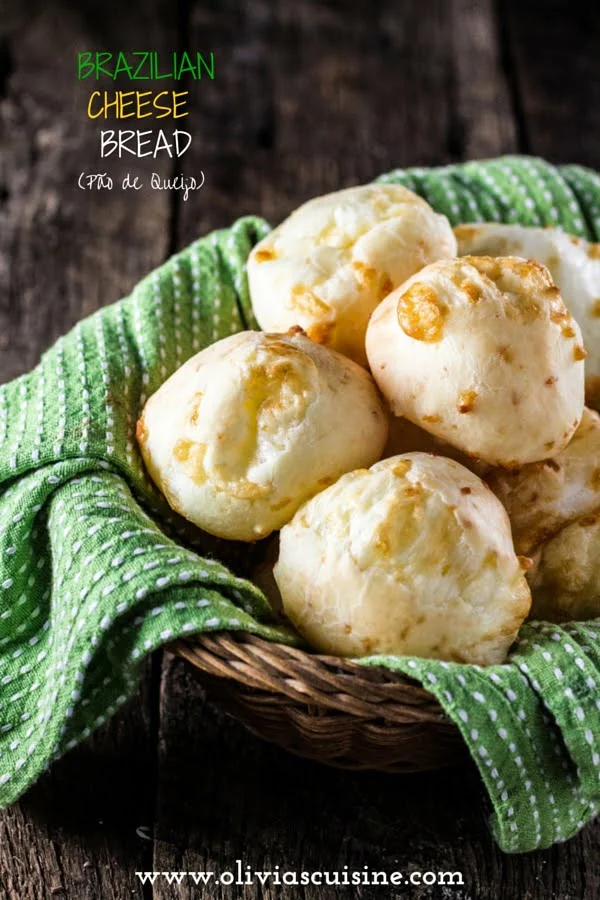
If you’ve never had Pão de Queijo before, prepare to fall in love. 💛 These Brazilian cheese breads are crispy on the outside, perfectly chewy on the inside, and packed with cheesy goodness in every bite. They’re a staple in Brazil (we grow up eating them!), and once you try them fresh out of the oven, you’ll understand why. The best part? You don’t need anything fancy to make them at home.
As a Brazilian, sharing these recipes is incredibly special to me. If you’re new to Brazilian cuisine, I have tons of recipes for you to explore – from comforting classics like feijoada to sweet treats like brigadeiros and everyday favorites like arroz soltinho. It’s all the kind of food I grew up eating, made simple enough for you to recreate at home.
At a Glance
- Flavor: Cheesy, savory, with a subtle tang from the Parmesan
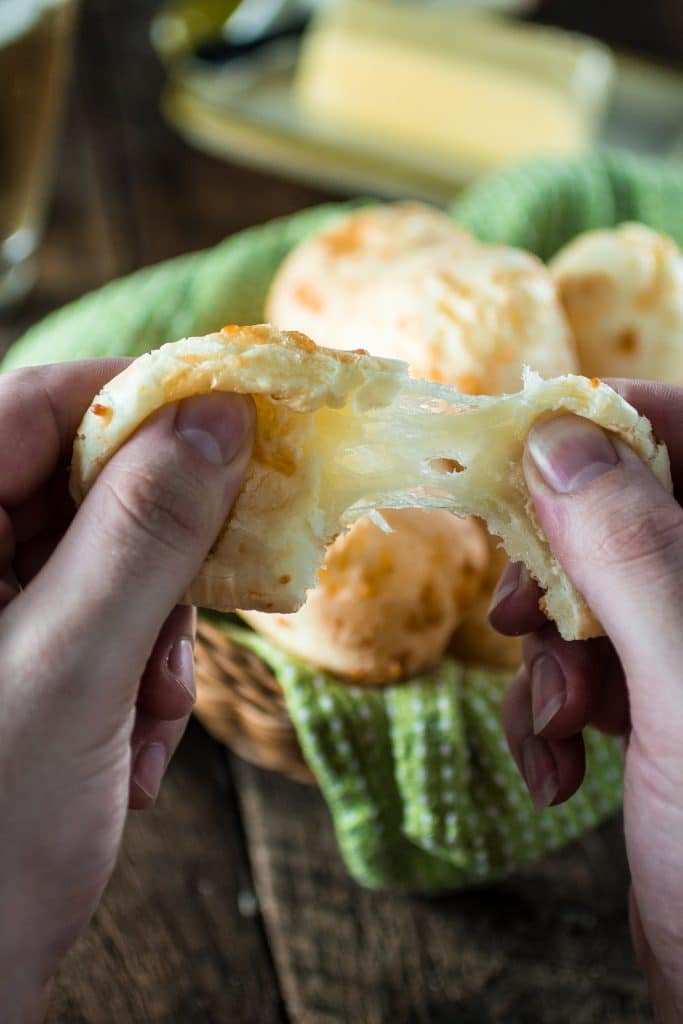
- Texture: Crisp and golden outside, soft, stretchy, and perfectly chewy inside
- Difficulty: Easy (just follow the steps – no kneading required!)
- Time: About 30 minutes, start to finish
- Diet: Naturally gluten-free (made with tapioca flour)
- Yield: About 20–30 cheese breads (depending on size)
- Method: Stovetop + stand mixer (to hydrate the tapioca flour properly)
- Perfect for: Breakfast, afternoon coffee, or anytime snacking ☕
What is Pão de Queijo?
If Brazil had a signature snack, pão de queijo would be it. These little cheese breads are made with tapioca flour, which gives them that unique chewy texture you won’t find in regular bread. They puff up in the oven, forming a golden, slightly crisp exterior with a soft, stretchy center packed with cheesy flavor.
Pão de queijo originated in the state of Minas Gerais, where cooks began using cassava (the root used to make tapioca flour) centuries ago, during colonial times. Wheat flour wasn’t widely available, so they got creative – and pão de queijo was born. The addition of cheese came later, once dairy production became more common in the region, turning it into the version we know and love today.
In Brazil, pão de queijo is everywhere. You’ll find it at bakeries, cafés, grocery stores, and just about every home kitchen. It’s a staple for breakfast or café da tarde (afternoon coffee), always served warm – and usually eaten faster than you can make the next batch.
Ingredients
To make authentic Pão de Queijo, you will need:
- Tapioca flour – Also known as tapioca starch, this is what gives pão de queijo its signature chewy texture. It’s naturally gluten-free and not interchangeable with other flours – this is the star of the recipe!
- Milk – Helps hydrate the tapioca flour and creates that soft, stretchy dough.
- Oil – Adds richness and keeps the cheese breads tender. I usually use a neutral oil like vegetable or canola.
- Salt – Enhances all the flavors – especially important since the dough itself is very simple.
- Eggs – Give structure and help bind everything together. Don’t skip or substitute here!
- Parmesan cheese – Adds that classic savory, slightly tangy flavor. Use freshly grated if you can for the best taste.
- Mozzarella cheese – Brings the gooey, melty factor and helps create that irresistible stretchy center.
How to Make Pao de Queijo
Pão de queijo is one of those recipes that feels fancy, but is actually very simple once you understand the method. In Brazil, it’s traditionally made with polvilho doce (sweet tapioca starch) and polvilho azedo (sour tapioca starch), plus queijo meia cura for that classic flavor. Since those ingredients aren’t always easy to find here in the U.S., I’ve adapted this version using tapioca flour and a mix of Parmesan and mozzarella – so you still get that chewy, cheesy goodness without having to hunt down specialty ingredients.
The dough might surprise you at first – it’s soft, sticky, and nothing like traditional bread dough. That’s completely normal! The magic happens when the hot milk mixture is poured over the flour, transforming it into that signature pão de queijo texture. Trust the process, and you’ll be rewarded with perfectly golden, chewy cheese breads.
Recommended tools and equipment: stand mixer (or you can do it by hand), saucepan, baking sheet, parchment paper
Here’s how I make this Brazilian cheese bread recipe. As always, you will find the printable (and more complete) version of the recipe at the end of this post!
Step 1: Heat the liquid ingredients
- In a saucepan, combine the milk, water, oil, and salt. Bring to a boil over medium-high heat.
Tip: Make sure it actually comes to a full boil – this is key for properly hydrating the tapioca flour and getting that signature chewy texture.
Step 2: Pour over the tapioca flour
- Place the tapioca flour in the bowl of a stand mixer. Pour the hot liquid over the flour.
- Mix until combined. The mixture will look white, sticky, and a bit like fondant – this is exactly what you want!
Tip: Don’t panic if it looks unusual at this stage. Pão de queijo dough is very different from traditional bread dough.
Step 3: Add the eggs
- With the mixer running, add the eggs one at a time, mixing well after each addition. At first, it might look like the eggs won’t incorporate – but keep mixing and the dough will come together.
Step 4: Mix in the cheese
- Add the Parmesan and mozzarella a little at a time, mixing until fully incorporated. The dough should be soft and sticky. If it feels too loose, you can add a bit more tapioca flour – but go slowly, as too much can make the cheese breads dense instead of chewy.
Step 5: Shape the dough
- Preheat your oven to 400°F/200°C and line a baking sheet with parchment paper.
- Lightly wet your hands with cold water. Using a spoon or small scoop, portion the dough and roll it into balls slightly smaller than golf balls.
- Place them on the prepared baking sheet, leaving a little space between each one.
Step 6: Bake
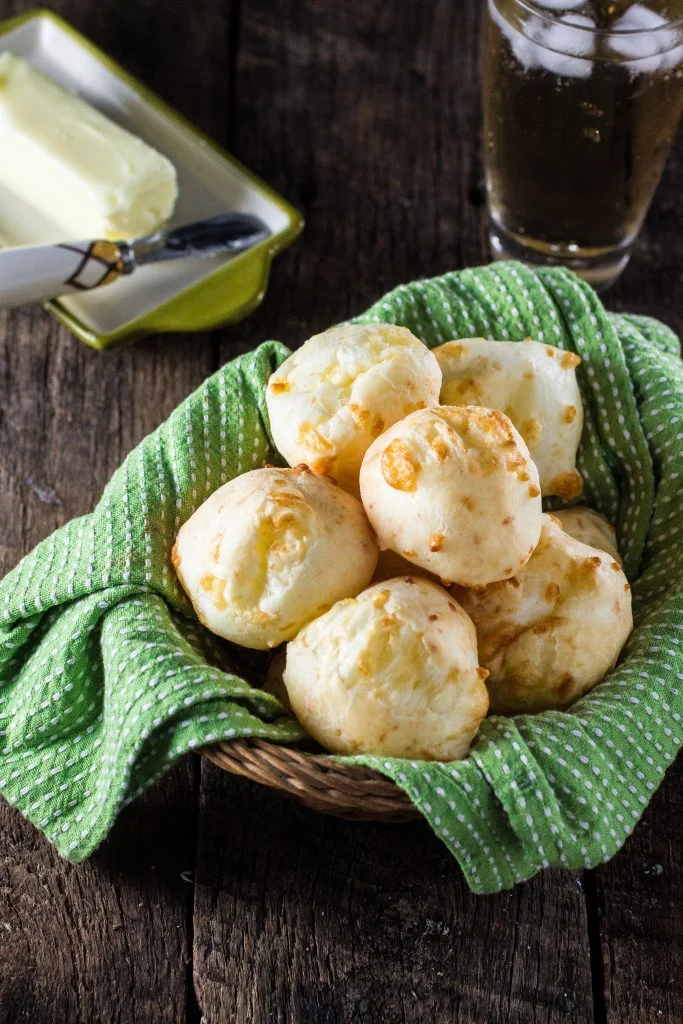
- Bake for 15–20 minutes, or until the pão de queijo are puffed and golden.
Step 7: Serve warm
Remove from the oven and serve immediately while warm – this is when they’re at their best, with a crisp exterior and that irresistible chewy, cheesy center.
Olivia’s Tips
- Make sure the milk mixture is boiling hot: If the liquid isn’t hot enough, the tapioca flour won’t hydrate properly and the texture will be off.
- Don’t be alarmed by the dough: Pão de queijo dough is supposed to be soft, sticky, and a little unusual. It won’t look like traditional bread dough, and that’s exactly right.
- Wet your hands when shaping: This makes a huge difference. A little cold water keeps the dough from sticking and helps you roll smooth, even balls without frustration.
- If the dough is too sticky to shape, chill it briefly: If your dough feels too soft or hard to handle, you can refrigerate it for 10–15 minutes to firm up slightly. This makes shaping much easier. Just don’t leave it in the fridge too long, or it can become too stiff and harder to work with.
- Use freshly grated cheese if you can: Pre-shredded cheese contains anti-caking agents that can affect how smoothly it melts. Freshly grated will give you better flavor and that irresistible stretchy center.
- Don’t overdo the flour: If your dough feels a bit loose, you can add a little more tapioca flour – but go slowly. Too much will make the pão de queijo dense instead of soft and chewy
- Eat them warm (this is key!): Pão de queijo is at its absolute best fresh out of the oven, when the outside is crisp and the inside is soft and stretchy. If they sit too long, they’ll lose that magic – but don’t worry, they reheat beautifully!
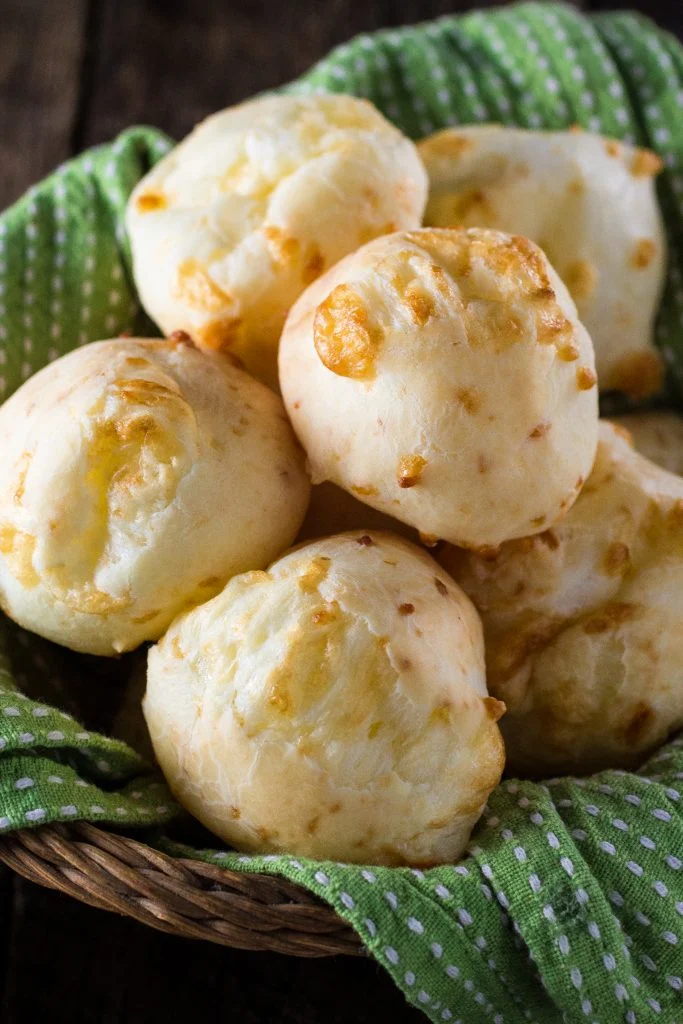
Serving Suggestions
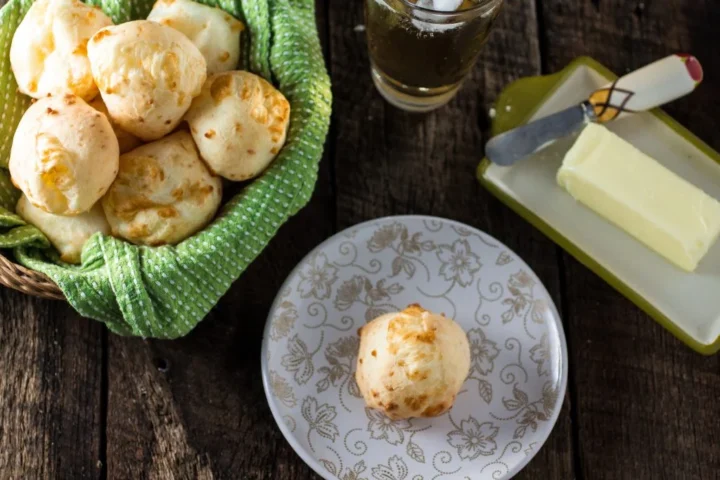
Pão de queijo is best served warm, straight from the oven, when the outside is crisp and the inside is soft and chewy. In Brazil, it’s most commonly enjoyed with a cup of coffee for breakfast or café da tarde – simple, cozy, and perfect.
For a truly Brazilian experience, try serving it with an ice-cold guaraná. The slightly sweet, fizzy soda pairs surprisingly well with the savory, cheesy bread and is a nostalgic favorite for many of us.
You can also turn pão de queijo into mini sandwiches. Slice them open and fill with cheese, ham, or your favorite spreads. One of my favorite ways to enjoy them is as Romeo and Juliet bites – little pão de queijo sandwiches filled with cheese and guava paste. It’s that perfect sweet-and-savory combination that Brazil is known for!
And if you’re feeling a little adventurous, try serving pão de queijo with dulce de leche. It might sound unusual, but that salty, cheesy bread with sweet, creamy dulce de leche? Absolutely irresistible.
Variations
One of the best things about pão de queijo is how versatile it is. While the classic version is simple and perfect as-is, there are plenty of ways to tweak it depending on what you have on hand or how you want to serve it. Here are a few ideas to get you started:
- Try different cheeses – While this recipe uses Parmesan and mozzarella for the best balance of flavor and stretch, you can experiment with other cheeses. Sharp cheddar adds a stronger flavor, while a bit of Gruyère or fontina can bring extra richness. Just keep a good balance between a flavorful cheese and a melty one.
- Make it with traditional Brazilian ingredients – If you can find them, try making pão de queijo with a mix of polvilho doce and polvilho azedo, plus queijo meia cura. This will give you a more traditional flavor and that slightly tangy note that’s classic in Brazil.
- Blender version (easier method) – If you’re looking for a quicker, more hands-off approach, I also have a blender pão de queijo recipe that uses muffin tins. You simply blend all the ingredients into a smooth batter and bake – no mixing or shaping required. The texture is slightly different (a bit more airy and less chewy), but it’s a great option when you want something easy and still delicious.
- Mini or larger pão de queijo – You can make them smaller for bite-sized snacks or slightly larger for sandwiches (or even as burger buns). Just adjust the baking time as needed – smaller ones will bake faster, while larger ones may need a few extra minutes.
- Add-ins for extra flavor – Mix in finely chopped herbs, garlic powder, or even a little cooked bacon for a fun twist.
Storage & Reheating
- Storage (short term) – Store any leftovers in an airtight container at room temperature for up to 2 days. They’re best fresh, but still delicious reheated.
- Refrigeration (if needed) – You can refrigerate them for up to 5 days, though they may lose some of their soft, chewy texture. Reheating will help bring them back!
- How to reheat – For best results, reheat in a 350°F (175°C) oven for 5–10 minutes, or until warmed through. This helps restore that crisp exterior and soft center. You can also microwave them for about 20–30 seconds, but they’ll be softer and less crisp.
Freezing (highly recommended!)
- Freeze before baking (best option)
Shape the dough into balls and place them on a baking sheet. Freeze until solid, then transfer to a freezer-safe bag or container.
When ready to bake, place them straight from the freezer into a 400°F (200°C) oven—no need to thaw! Just add a few extra minutes to the baking time. - Freeze after baking
Let the pão de queijo cool completely, then freeze in an airtight container for up to 2 months. - Reheating from frozen
Bake in a 350°F (175°C) oven until heated through and crisp again.
Frequently Asked Questions
Yes! The best way is to shape the dough into balls and freeze them unbaked. When ready to bake, place them straight from the freezer into the oven – no need to thaw. Fresh pão de queijo anytime!
That’s completely normal. Pão de queijo dough is naturally soft and sticky because of the tapioca flour. Wetting your hands with a little water makes it much easier to shape.
Yes! You can mix everything by hand using a sturdy wooden spoon. It takes a bit more effort, especially at the beginning, but it works just fine.
This usually happens if the liquid wasn’t hot enough when poured over the tapioca flour, or if too much flour was added to the dough. Make sure the milk mixture comes to a full boil and avoid over-measuring the flour.
Yes! That’s actually the traditional way to make pão de queijo. Using a mix of both gives a slightly tangier flavor and an even chewier texture.
Did you make this recipe? I love hearing from you! Please comment and leave a 5-star rating below. You can also take a photo and tag me on Instagram with #oliviascuisine.
Pão de Queijo (Authentic Brazilian Cheese Bread)
Ingredients
- 1 1/4 cups (300ml) whole milk
- 1/2 cup (120ml) water
- 1/3 cup (80 ml) neutral oil (such as vegetable or canola)
- 2 teaspoons (10g) salt
- 4 cups (500g) tapioca flour (tapioca starch)
- 2 large eggs
- 1 1/2 cups (150g) Parmesan cheese, finely grated
- 1 cup (100g) mozzarella cheese, shredded
Instructions
- Preheat oven to 400°F (200°C) with a rack in the middle. Line a baking sheet with parchment paper.
- In a saucepan, combine the milk, water, oil, and salt. Bring to a boil over medium-high heat.
- Place the tapioca flour in the bowl of a stand mixer. Once the liquid mixture reaches a full boil, pour it over the flour. Mix until combined – the texture will be sticky and slightly stretchy.
- With the mixer running, add the eggs one at a time, mixing well after each addition. The dough may look like it won’t come together at first – keep mixing until smooth.
- Add the Parmesan and mozzarella a little at a time, mixing until fully incorporated. The dough should be soft and sticky.
- The dough is supposed to be soft and sticky. However, if you're worried it's too liquidy, add some more tapioca flour. Just don't over do it or your cheese bread will be tough and not too gooey.
- Lightly wet your hands. Using a spoon or small scoop, portion the dough and roll into balls slightly smaller than golf balls. Place on the prepared baking sheet.
- Place the balls on a baking sheet covered with parchment paper and bring it to the preheat oven.
- Bake for 15–20 minutes, or until puffed and golden.
- Serve warm for the best texture – crispy outside, soft and chewy inside.
Notes
- If the dough feels too sticky to shape, refrigerate for 10–15 minutes to firm up slightly.
- Avoid adding too much extra tapioca flour, or the cheese breads may turn dense.
- For best results, use freshly grated cheese.
- Freezing instructions: For best results, freeze the dough before baking. Shape into balls, place on a baking sheet, and freeze until solid. Transfer to a freezer-safe bag and freeze for up to 2 months. Bake straight from frozen at 400°F (200°C), adding a few extra minutes to the baking time.
Nutrition



298 Comments on “Pão de Queijo (Authentic Brazilian Cheese Bread)”
Olivia — Do you think I could use a hand blender or Vitamix Blender in place of the stand mixer?
Hi Roxane, if you use the blender, the dough will be too liquidy to form balls. Alternatively, you can use the blender and then bake in a muffin tin! :) I hope that helps. Let me know if you have any other questions. Best, Olivia
Oi Olivia! Just found out about you and you have a way to my heart with these paes de queijos! I’m on the west coast and have seldom had a taste of home that I can truly love! Will be trying these today! Loving going through your Brazilian recipes and connecting! Boa semana e bjs! – Carlen
Hi. How long do you think you mixed them for?
I could kiss your feet!
My better half talked about a legendary cheese bread he had once at a restaurant in the middle of the USA and I tried many recipes to recreate it for him only to get dry, bready, crumbly and terrible greasy biscuits. I followed your recipe to the letter and it was a first time abounding success. They looked as good as your photo and the look on his face when he tried the first one was priceless. His comment, “YOU DID IT!!” Followed up by saucer sized eyes, in awe, that stated, “I have never had a cheesy bread this good in my life!”
It was an amazing moment for me! I love to fill is pallet as he fills my life with wonderful things!
Thank you for your recipe!! These will be a staple in our home!
I homestead and grow all of our food so I made these to go with a feijoada I made and grew from scratch. They were a perfect complement to the dish. I would love to try your feijoada recipe if you have one you like. It is such a unique dish and unlike anything in America.
I could not be happier! This is just like the ones from my childhood memories… perfect crust outside, gooey inside… I had given up on finding a good recipe, I’m so glad I came across your blog! Thank you so much for the recipe Olivia, from one Brazilian to the other!
Wish I could post some pictures!
Oh my goodness. When I was a kid, there was a vendor at my local farmers market that sold these frozen in 24 packs. Every week, my family would buy them and they would be gone so fast! I cannot believe I stumbled upon this recipe, and I am in even greater disbelief that these taste EXACTLY like the ones I had as a child. Thank you, thank you, thank you, Olivia!!! I followed the recipe, but I used fresh mozzarella (the kind that comes in water) and it wasn’t until I was already in the middle of making them that I realized that maybe fresh was too wet. I just added a little extra tapioca flower to balance out the wetness and they turned out amazing! The most incredible, cheesy, gooey bread balls. Now, the only question is how the farmer market man got such perfect, round balls from this dough.
I first used other recipe, it was good right after baking, but after a few hours, it turned so hard. Would the bread keep its freshness and will not turn as hard as a rock? I am planning to bake this in two days for an event. Thank you.
Hi Perni, unfortunately, any homemade bread won’t last more than a couple days without getting hard. Pão de queijo loses its texture even quicker, maybe because of the tapioca flour… I would make them, form the balls and then freeze and bake the day you’re planning on serving them. The other alternative would be to make them the day before and then reheat them in the oven for about 5 minutes, spraying a little bit of water on them. I hope that helps! :)
I’m expecting that you’re not supposed to pack the flour, but when I made these it took close to 8 cups of flour to get the dough to the right consistency. Sticky, not liquid, and shapeable. Well, mostly shapeable. My balls flattened before I could even transfer them to the oven, and I was disappointed that, like you mentioned could happen, they weren’t rising. They look much more like overly fluffy sugar cookies than spheres like I’m used to seeing. I’m fairly certain that they didn’t rise because half of the tapioca flour was put in well after the dough-batter had cooled, but when I tried one fresh out of the oven I was pleasantly surprised to see the consistency was exactly like it was supposed to be! The cheese stretched about half an inch before separating and they were perfectly crisp on the outside while still chewy on the inside. All in all, I doubled the tapioca flour and added maybe a cup of extra cheddar because I’m an addict. I tried the rolling method where you oil your hands, and that worked very well also! I would add to those who have been having liquid dough issues to be prepared to possibly have to double the flour. Trial and error pretty much will be the only way I’ll be able to figure that out, though. Wonderful recipe though!! You just have to be willing to experiment and ruin a few in the process of perfecting the art.
Thanks, Olivia. Everything went well, and it was delicious! Now, I will make more because my colleagues and other foreign visitors love them and have asked if I will bake them again! Haha! and some asked for the recipe. Thanks again, Olivia!
After my countless search for the best brazilian cheese bread i found your recipe. I made it today and it’s the best ever!❤️ Thank you so much Olivia!
After my countless search for the best brazilian cheese bread i found yours.I made them today and truly the most delicious cheese bread. Thank you so much for sharing this gem!
Mine came out very liquidy as well. When you say to boil the milk/water/oil, how long do you mean? Should I bring it ti a boil then immediately remove it or should I boil it for several minutes?
I take it out as soon as it reaches a rapid boil, but I don’t think that’s the reason. The consistency of the dough will depend on weather, humidity, etc, so feel free to add some more tapioca flour and/or cheese until you can handle the dough.
Hi,
I am planning on making these tomorrow.
I am wondering what kind of oil you use? And also, do you indeed use the variety of grated Parmesan that comes in a plastic container that one puts on spaghetti (e.g. Kraft)? Thank you.
Hi Gina,
I use vegetable oil. And yes, sometimes I use the store bought grated Parmesan when I don’t feel like grating it myself. :)
These were PERFECT! I followed the recipe exactly, and they came out crusty on the outside and gooey on the inside. We scarfed a bunch warm, and then saved a few overnight in a ziplock on the counter. In the morning I sliced them in half and made tiny little bacon, egg & cheese sandwiches out of them, warming them at 350 for 5 minutes. OMG, breakfast heaven. THANK YOU!!
Hi Tera,
I’m so glad you enjoyed them! It’s my favorite recipe on the blog. :)
Best,
Olivia
HI, I just made these… They look and smell beautiful, but are they supposed to have that tacky texture even after cooled? Maybe something went wrong. These have more of a cheese with a little bread in them consistency than bread. Are they supposed to be light and fluffy?
Hi Verbena,
Pão de queijo is usually gooey. They are dense with the cheese instead of light and fluffy. :)
So excited to try these tomorrow night. Quick question for you, Olivia — do you know if I could use a blender (Nutribullet) instead of a mixer? It’s all I have at home so I’m keeping my fingers crossed that it will work!!
Hi Lauren,
I think for this particular recipe, the dough will turn out too soft if made in a blender. You can try and bake them in a muffin tin and that might solve the problem! :) I’ve been wanting to post a pão de queijo blender recipe I have but haven’t had the time with the new baby. I’ll put it on my to do list.
My whole family loooooves these, the recipe is fantastic. Every single time I think something has gone wrong in the process (HOW will this ever mix? surely it CANNOT be this gooey??) but it always turns out great!!!
Loved the blog post and your research and want to try it. I don’t eat eggs? Would you suggest a substitute and its replacement quantity? Would love to try out the eggless recipe if there is one. :)
I made these but used a different recipe. I will try your recipe next. When I had them at a local restaurant they were dense and not airy. The recipe I made last night used a blender and did not cook the dough. Mine were good but not dense. Do you have any suggestions? I pinned a bunch of your recipes and will be trying a couple this weekend.
In Brazil we commonly make “pão de queijo de liquidificador” (blender cheese puffs), which are sort of the lazy man’s cheese puffs. You basically take all the ingredients, throw them in the blender, and blend! The result is something very liquid, impossible to roll, so you just pour it into a cupcake pan and bake. The result is incredibly soft and tasty puffs.
They’re very popular in Minas and pretty much everywhere in Brazil with people who like to make their own puffs from scratch (not very common, you can buy good frozen ones in the supermarket).
I’ve recently moved to Canada, and have been trying to find a recipe that works well with the ingredients I can find here (North American cheese is very different from Minas cheese). The recipe I’ve been using is similar to yours and has been working well. Your puffs look amazing, and I miss rolling them, so I can’t wait to try yours! Thanks for sharing. :D
Very good recipe, but i recommend using less salt. I dont know if it was the cheese i used but the paes ended up a little too salty. Still great, tho!
I do t think your proportions are correct. This is the third recipe I’ve tried for this and the only one they didn’t work. Can you confirm your liquid specifications are correct! I really wanted this to work. Not good.
Thanks!
Hi Tim, yes my proportions are correct. I make these all the time and had several readers make them as well. Maybe if you tell me what went wrong with them I can help you troubleshoot? :)
These turned out great just like my friend and I remembered from Brazil!Too bad I didn’t read all of the comments to know it would burn out the hand mixer, we finished by kneading.
I have a similar recipe for these. That recipe is put all of the ingredients in a blender to mix and it is liquid. Then pour in mini muffins and bake. It tastes the same as your recipe and they are puffy. Both recipes are fantastic. I use the sticky stiff dough, which is yours for a pizza crust. Since I am gluten free it works out great. And it is delicious!! Thank for this recipe.
Mine came out to soft —-did not see the note about adding more tapioca flour. So I did put in muffin pans. WONDERFUL . One recipe had them in mini muffin pan s. Will definitely be a staple.
THANK YOU
Oh my goodness. I went to Brazil back in 2008 and had these, and have wanted to have them since I’m SO glad I found this! Trying these first thing when I get home!! Thank you!
I made these today, and while they were super yummy, the dough spread out and they were not puffed like rolls. Any ideas on what I did wrong? I was thinking maybe not enough flour, or I mixed it too long? We are having a Brazilian New Year’s Eve party, so I will keep trying this recipe until I get it right. They tasted fabulous, just need to get the look right.
Amazing little cheese puffs. I have made them 3 times in the past 2 weeks. This last batch, I added rosemary and garlic. They would be incredible dipped in pizza sauce or olive oil and vinaigrette. I used queso fresco instead of mozzarella and they turned out amazing.
My brother brings me a bag of polvilho azedo every time he comes home from Rio for a family visit (lucky me!), so I have been making the cheese rolls here in the States for years. He and his two sons and I did a cheese taste test years ago looking for the “perfect” substitute for minas meia cura and decided a chunk of manchego from Costco was both the right cheese and the right source, especially for its moistness. Have been using an ancient recipe from a defunct site called “Recipe Gullet” and will now try yours. Thanks for sharing this heavenly treat with the Yankees!
Great recipe, just used half of the water on the original recipe. Used a ice cream scoop and worked like a charm. I’ll repeat this recipe many many times. Thank you
Thank you soooo much for this recipe! This was the first thing I made with my new KitchenAid and the recipe worked perfectly! The only thing that might have helped would be pictures of the “during/dough” process. I referenced another website to make sure my dough looked right as I went along in the recipe.
These look and taste exactly like the Pao de Quiejo I get from a Brazilian restaurant near my house so I’m very excited I can now make these on my own!
Hi, does it matter if you use fresh mozzarella and grate it yourself vs pre-shredded mozzarella in a bag? I’d prefer to use fresh, but I’m worried about the difference in moisture content and how it may affect the recipe. Thanks!
Hi Katherine, you can totally use a block of mozzarella, but it can’t be the fresh one. :) If you feel like the dough is too wet, just add a little more tapioca flour to get the right consistency.
Hey’
I tried the recipe (about 3 times now), but for some reason i keep getting the consistency wrong, no matter how much tapioca i put ib it- its just too runny. and too sticky post-baking (not at all like a bun, more like toffy). Could the reason be a different tapioca flour/kind. What should i do?
Thank you!!
Made these tonight, our family is gluten free due to having two kids with celiac. They turned out great and were a huge hit. Very delicious and also very easy to make. We had these in a restaurant before and loved them, and had also purchased a bag of frozen ones in a grocery store that were very expensive. So happy we can easily make homemade and have them turn out just as good if not better. Thanks!!
Worked great in Iowa wintertime. Never made these by hand so I thought the unbaked dough would be like cream puffs dough texture, so I planned to stir the egg in fast by hand, but once the tapioca flour was in it formed a rubber ball that I could not penetrate by hand-stirring. Put it in the kitchen Aid mixer and it stirred that egg right in exactly as described here. I used butter for my oil and used cheap powdered parmesan, then grated fancier block- parmesan to use in place of the mozzarella. Came out very nice and sharp-tasting, and gooey-stretchy in the centers. In my opinion this recipe is very much spot on. Everyone enjoyed them, age 3 and up. Thank you!
Thanks for the feedback, Leah. I’m glad it was enjoyed! :) And I always admire who makes pão de queijo by hand. I certainly don’t have the muscles for that! haha
Queria te abraçar! Seria possível utilizar a tapioca starch so invés da tapioca flour! Muito obrigada por salvar uma mineira em terras gélidas.
Hi Heloisa, they are the same thing! :)
Thank you so much for this, Ms. Olivia. We just moved and my Brazilian cookbook is in storage somewhere. It’s great to have a pão de queijo recipe and it’s clear that you put so much effort into this! Thank you for your work… I will make this for my Brazilian husband’s birthday.
After having some Brazi bites from Costco at a friend’s house this last weekend, my daughter wanted to try to make some. She found your recipe this morning. We had half a bag of tapioca flour so she made half a recipe. Our cheese wasn’t straight mozzarella, but a bag of shredded Italian Blend, so we weren’t sure what to expect. They came out wonderful! Very quick – her half batch was out of the oven in 30ish minutes! I immediately put tapioca flour and shredded mozzarella on our shopping list to make sure we can do these again soon! Thank you so much for sharing your recipe. :)
Oops, I meant 30 minutes start to finish, not cooking time.
Amazing that you are spreading the traditional cuisine of the beautiful state of Minas Gerais for everyone. Pão de queijo (brazilian cheese bread) is a typical product of Minas Gerais state and I’m so glad so many people in the world now can taste it as the original one.
Great!
What kind of oil do you use?
I use canola but any vegetable oil works! :)
Hi Olivia ! The recipe is amazing !!!!!!! Can I check how long can I place the dough in the fridge ? Is one week ok?
So my only previous experience with this type of bread has been at Texas de Brazil and forgo de cho the chain churiscarria resteraunts in the US. I had also tried another recipe that u made in the blender. It was more liquidy and u made in mini muffin tin. Anyway the other recipe I tried wasn’t cheesy enough. I tried 2-3 of them. This is the first one u rolled by hand. These are amazing. I’m eating them right now. They r so good. A couple notes I would make. I found the consistency to look more like frosting than fondant. Fondant is really firm to the touch. Although this is a dough once u start handling it, it looks more like frosting. The other note I would make is that when I talked to the manager at Texas de Brazil they only use Parmesan cheese. I didn’t have enough to do only one cheese so I did it your way and the inside is like all cheese. It tastes amazing but the consistency at TDB is more bread like a little. So next time I may do all parm and see how I like it.
One other comment. I used oil on my hands. I think in the future I will place the dough in little piles the right size on a sheet of parchment to the side and then roll them all at once. I found this to be the most time consuming part was continuing to re wet or re apply oil. Otherwise the recipe is super easy. Just wish I could use a cookie scoop because all of mine are different sizes. I am terrible at that and love my cookie scoop for that reason.
I just made this following a web search for a good recipe that didn’t seem crazy difficult. This turned out PERFECT. My husband is from Brazil and we are always wanting to eat at the Brazilian restaurants but they are over an hour away. This is something I will make monthly for that craving. After reading other comments, I did the mixing with a wooden spoon and my hands. I used regular olive oil and shredded cheeses. I even refrigerated half the dough for a couple hours between batches and both came out perfect. This is awesome. THANK YOU
Is there an easier or alternative method to mixing the tapioca flour and wet ingredients together if you don’t have a stand mixer? I tried using a hand mixer (a cheap one, I admit) and it just wasn’t strong enough to mix the dough. The dough kept riding up the mixing handles up into the mixer. I got frustrated and finished mixing the eggs by hand. After adding the cheese, I tried mixing the dough literally by hand, which was not a good idea!
Anyway, I was wondering if I could add the tapioca flour little by little to the wet mixture and mix by hand?
Any help or tips would be appreciated.
I made these puffs today. Deliciously perfect or perfectly delicious?!! My acquaintances from Ecuador love these as well and their daughter who was born in the US gave two thumbs up.
Thank you for sharing this recipe. This recipe is a keeper and I have shared your link to my family and friends.
Help! I used whole cassava flour instead of tapioca flour and the first batch of my cheese rolls came out too dense and too small. I’m thinking of adding a little baking powder and/or an extra egg to encourage the dough to expand as it cooks… Do you have any suggestions?
Hi Julia, I have no experience using whole cassava flour. My understanding is that it is less processed, so it has more fiber, just like whole wheat VS white flour. Is there any reason you don’t want to use tapioca flour? Bob’s Red Mill makes a good one and it’s easy to find here in the US. If you really want to try the whole cassava flour, I would try adding more liquid. Let me know how it goes!
Wow! So, I just made these. I’ve been looking for a good one of these ever since I enjoyed these at a Brazilian steakhouse! These are AMAZING! I’d tried a recipe for them about a year ago, using regular flour. This time, when I looked it up, everything said to use tapioca flour. I found some at Dillons (Kroger’s) and bought 5 bags. I stuck to the recipe 100%. I used a handheld mixer, as I don’t have a stand mixer, and I smelled the motor. So, I stopped and just mushed everything by hand! WHOA…like you said – STICKY! I noticed some people said it was too runny and I wonder if maybe they didn’t get the liquid amounts correct. When I first read it I saw 1 3/4 milk, then noticed…whoa! no…it’s only 1 1/4 c. milk! Anyway, I didn’t bother with rolling them into balls…way too time consuming for me. Instead I took a spoon and stuck in in shortening, just to grease it, then just took out spoonfuls and plopped them on my baking tray – scooping the dough off with my finger. They turned out EXCELLENT!!! I am SO glad I found this recipe! Thank you so much for posting!!!
Just tried this with my exchange student from Brazil and he says they are just like home with the exception that there’s no “dipping” sauce. He says its like a cheese spread or something. Any ideas? We will be taking them to a cultural exchange dinner and I would love to have the “sauce”! Thanks.
Hi Amanda! I’ve never heard of a dipping sauce for pão de queijo and I’m Brazilian! Maybe he means requeijão?
I am making your recipe today! :) I first discovered these delicious treats in Peru and then again in Ecuador. Soon, I will try them IN Brazil! Ha ha!
Hi Steven, I hope you enjoyed it! :) Best, Olivia
These were so good! I had never even heard of this bread, but as I had a bag of tapioca flour thatbI needed to use up I decided to try it! The dough was too sticky to form into balls with my hands, so I used two spoons to drop mounds of dough onto the baking sheet. Very good!
